
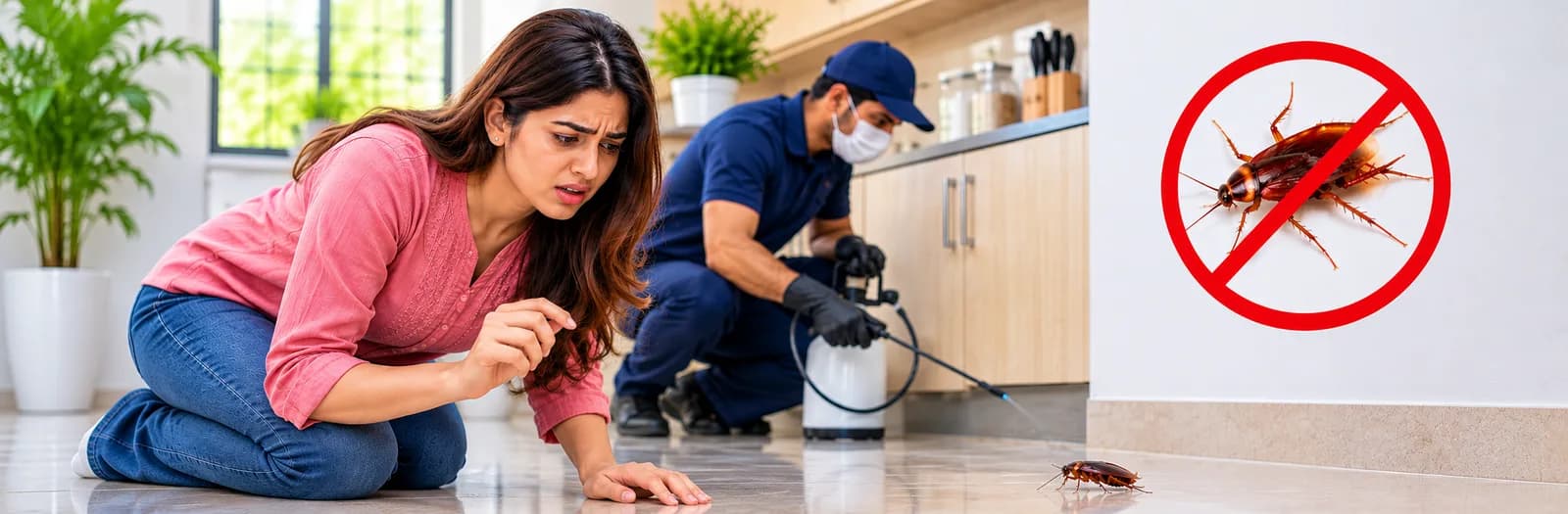
You booked pest control, the technician sprayed and gelled every corner, and for a few days the kitchen looked clear. Then, two or three weeks later, a small brown cockroach darts out from under the sink. Sound familiar?
You are not imagining it, and it doesn't always mean the treatment failed. Cockroaches are among the hardest household pests to eliminate, especially in the warm, humid conditions of Dubai and the rest of the UAE. Below we explain the real reasons cockroaches come back after treatment, how to tell normal post-treatment activity from a true re-infestation, and what you can do to keep them gone for good.
Is It Normal to See Cockroaches After Pest Control?
Yes, for a short while. In the first one to two weeks after a treatment, many homeowners actually see more cockroaches, not fewer. This happens because:
- Residual insecticides irritate cockroaches and flush them out of their hiding spots, often in daylight.
- Poisoned cockroaches become slow and disoriented before they die, so they wander into the open.
- Gel baits work slowly by design. A cockroach eats the bait, returns to the nest and spreads it to others, which can take several days to show results.
If the cockroaches you see are sluggish, lying on their backs or dying, the treatment is working. The concern starts when you see healthy, fast-moving cockroaches, especially tiny nymphs, three or more weeks after treatment.
7 Reasons Cockroaches Keep Coming Back After Treatment
1. The Eggs Survived
This is the most common reason. Cockroaches lay their eggs inside a hard, protective capsule called an ootheca. A single German cockroach egg case can hold 30 to 40 eggs, and the casing shields them from most sprays. Female German cockroaches often carry the case with them until it is just about to hatch.
So while a treatment can wipe out adult cockroaches, eggs that were already laid may hatch two to four weeks later, creating what looks like a brand-new infestation. This is exactly why a single visit is rarely enough for an established problem, and why a follow-up treatment timed to catch the newly hatched nymphs is so important.
2. The Treatment Didn't Reach the Nest
Cockroaches spend most of their lives hidden. They squeeze into gaps as thin as a coin – behind kitchen cabinets, inside door hinges, under the fridge and oven, inside electrical outlets, behind the dishwasher and in the motors of appliances. If treatment only covers the visible floor and baseboards, the core colony stays untouched and simply rebuilds.
3. Your Home Still Offers Food, Water and Shelter
Cockroaches can survive for weeks without food but only days without water. Even after a professional treatment, they will keep returning if your home gives them what they need:
- Crumbs under the sofa, toaster and kitchen appliances
- Grease build-up on the stove, extractor hood and cabinet edges
- Pet food left out overnight
- Dripping taps, leaking pipes and wet sink cabinets
- Condensation from air conditioners
In the UAE, moisture from AC units is an often-overlooked attraction. If you've noticed water pooling around an indoor unit, our guide on why your AC is leaking water inside the house explains the causes and fixes. Crumbs trapped in upholstery also feed cockroaches, so regular couch cleaning at home does more than keep your living room fresh.
4. They're Coming In From Outside or Next Door
In apartment buildings and villas alike, your home is only one part of a bigger picture. Cockroaches travel between units through:
- Shared drainage and sewer lines
- Dry floor traps in bathrooms, balconies and laundry areas
- Gaps around pipes, cables and utility shafts
- Garbage chutes and building bin rooms
- Cracks under main doors and around windows
Larger American cockroaches in particular often enter through drains. If a neighbor's flat or the building's common areas are infested, your treated home can be re-colonized within weeks.
5. They Hitchhiked In
Cockroaches and their egg cases are frequently carried into homes in cardboard boxes, grocery bags, delivery packaging, second-hand furniture and appliances. Moving house is a high-risk moment: boxes that sat in storage or a truck can bring an infestation with them. Unpack quickly and get rid of cardboard rather than storing it in cupboards, where it becomes perfect shelter.
6. Cleaning or DIY Sprays Undid the Treatment
It is natural to want to scrub everything after pest control, but cleaning too soon or too thoroughly can remove the residual insecticide and gel baits that are meant to keep working for weeks. Common mistakes include:
- Mopping baseboards and wiping inside cabinets right after treatment
- Washing away gel bait spots
- Spraying supermarket insecticides near professional baits, which contaminates them and makes cockroaches avoid them
- Using repellent sprays that scatter cockroaches deeper into walls or into new rooms
Always ask your technician which surfaces can be cleaned and when.
7. Resistance and Bait Avoidance
German cockroaches, the most common indoor species in UAE kitchens, breed fast, and some populations have developed resistance to commonly used insecticides. Research has even found populations that avoid certain sweet-tasting baits. When the same off-the-shelf product is used again and again, the cockroaches that survive pass on their resistance. Professional pest control rotates between different active ingredients and combines gels, residual sprays and growth regulators to get around this.
How to Stop Cockroaches From Coming Back
A treatment works best when your home stops supporting the colony. After pest control, follow these steps:
- Follow the aftercare instructions. Stay out of treated areas for the recommended time and avoid cleaning treated surfaces until your technician says it's safe.
- Book the follow-up visit. For moderate or heavy infestations, a second treatment about two to three weeks later targets the nymphs that hatch from surviving eggs.
- Remove food sources. Store food in airtight containers, clean up after every meal, empty the bin every night and don't leave pet food out.
- Fix moisture problems. Repair dripping taps and leaking pipes, dry the sink area at night and keep your AC drain lines clear. Routine maintenance also helps – see our comparison of AC cleaning vs AC duct cleaning to understand which your home needs.
- Keep floor traps wet. Pour water into rarely used floor drains every week (or fit drain covers) so the water seal blocks cockroaches from the sewer line.
- Seal entry points. Fill cracks around pipes, cabinets and skirting boards with sealant and fit a door sweep to the main door.
- Declutter. Get rid of cardboard boxes, old newspapers and paper bags, which cockroaches use for shelter and breeding.
- Deep clean the kitchen regularly. Degrease the hob, extractor hood, behind the fridge and under the oven – the areas cockroaches love most.
Cockroaches are rarely the only pest in a neglected corner. If you're checking wooden cabinets and frames while you're at it, our guide on how to identify termite damage in furniture and walls will help you spot early warning signs.
Signs the Treatment Isn't Working
Call your pest control provider back if you notice any of the following:
- Healthy, active cockroaches more than three to four weeks after treatment
- Very small nymphs, which show the colony is still breeding
- Fresh droppings that look like black pepper or coffee grounds
- Egg cases in cabinet corners, hinges or behind appliances
- A musty, oily smell in the kitchen or storage areas
DIY vs Professional Cockroach Control
Supermarket sprays can kill the cockroaches you see, but they rarely reach the nest, don't affect eggs and can make the problem worse by scattering the colony. Professional pest control is more effective because technicians:
- Identify the species and find the actual harborage points
- Use a combination of gel baits, residual treatments and insect growth regulators
- Treat cracks, voids and appliances that DIY products can't reach
- Schedule follow-ups to catch newly hatched nymphs
- Advise on the hygiene and sealing changes that prevent a comeback
Get Rid of Cockroaches for Good With Care N Clean
If cockroaches keep returning to your home, it's time for a thorough, properly planned treatment. Care N Clean provides professional pest control and home services across the UAE, carried out by in-house, background-checked staff with upfront, VAT-inclusive pricing. Pair your pest treatment with a kitchen deep clean to remove the grease and crumbs that keep cockroaches coming back.