
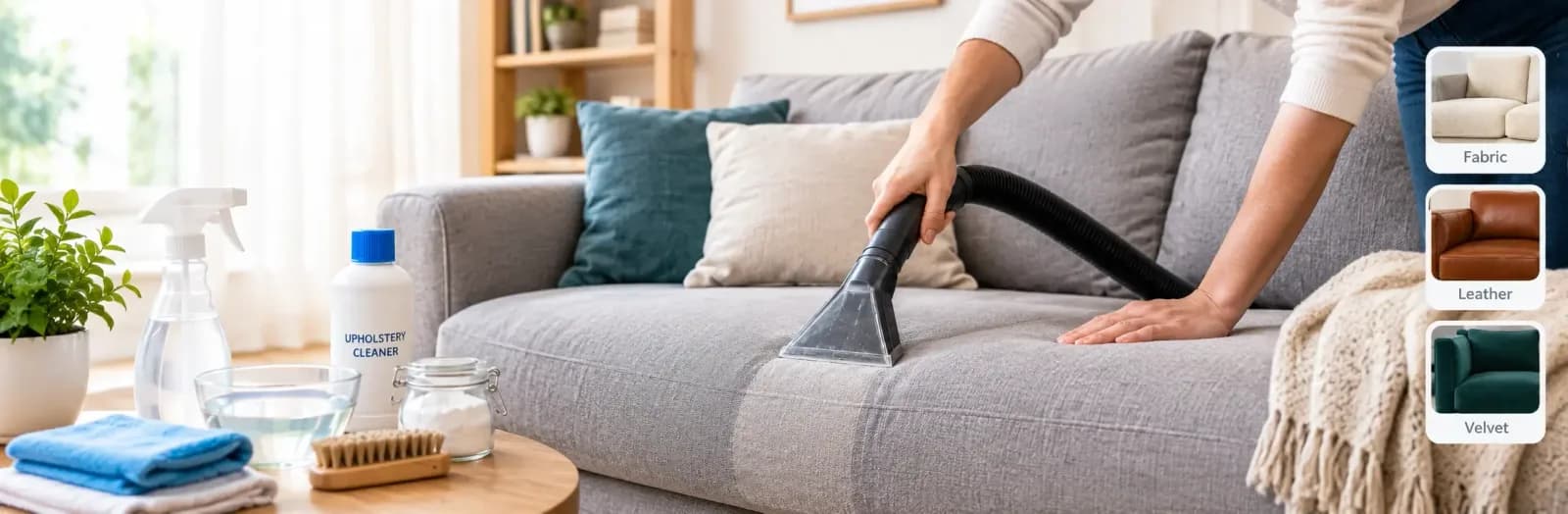
A clean couch makes your living room more comfortable, inviting, and hygienic. However, everyday use can leave your sofa covered in dust, food crumbs, body oils, pet hair, spills, and unpleasant odours. Over time, these contaminants can settle deep into the upholstery, making the couch look dull and smell less than fresh.
The good news is that you can clean most couches at home with the right tools and techniques. Whether you have a fabric sofa, leather couch, velvet upholstery, or a sofa stained by food, urine, or pet accidents, choosing the correct cleaning method is essential.
In this guide, you’ll learn how to clean a couch at home, remove common stains, eliminate unpleasant smells, and keep your sofa looking its best without damaging the upholstery.
What You Need to Clean a Couch at Home
Before you start cleaning, gather the supplies you may need. The exact products will depend on your couch’s material and the type of stain you’re treating.
- Vacuum cleaner with an upholstery attachment
- Soft microfiber cloths
- Soft-bristled brush
- A bowl of lukewarm water
- Mild, upholstery-safe detergent
- Baking soda, where suitable for the upholstery
- An upholstery-safe stain remover
- An enzyme-based cleaner for pet urine, where compatible with the fabric
- A dry towel for absorbing moisture
You may not need every item for every cleaning task. Always check the manufacturer’s care instructions and test any cleaning solution on a small, hidden area before applying it to the entire couch.
Step 1: Check the Couch Cleaning Instructions
The best way to clean a couch depends on its upholstery material. Before applying water or cleaning products, look for the manufacturer’s cleaning tag, which may contain one of the following codes.
- W: Water-based cleaning products may be suitable.
- S: Use a solvent-based upholstery cleaner recommended for the material. Avoid water-based cleaning.
- W/S: Either water-based or solvent-based products may be permitted, subject to the manufacturer’s instructions.
- X: Vacuuming or professional cleaning methods specifically approved for the upholstery may be appropriate. Do not apply water or cleaning solutions without further guidance.
These codes are common upholstery conventions, but not every manufacturer uses them in exactly the same way. Follow the sofa manufacturer’s instructions if they differ from general guidance.
If the tag is missing, identify the upholstery material and consult the manufacturer before using liquid cleaners.
Step 2: Remove Dust, Crumbs, and Loose Dirt
Start by vacuuming the entire couch before using any liquid cleaning solution. This prevents loose dirt from turning into muddy residue when it comes into contact with moisture.
Follow these steps:
- Remove cushions, throws, and other removable items.
- Vacuum the seat cushions, back cushions, and armrests.
- Use the crevice attachment to clean between cushions and along the seams.
- Vacuum underneath removable cushions and around the sofa’s base.
- Use a suitable upholstery attachment to remove dust and pet hair from the fabric.
For pet hair, a soft upholstery brush or a pet-hair removal tool can help loosen stubborn strands before vacuuming.
If your couch has delicate fabric, avoid aggressive brushing or excessive pressure, which may damage the fibres.
Step 3: Choose the Right Cleaning Method for Your Couch
Once the loose dirt has been removed, choose a method that matches your sofa’s material.
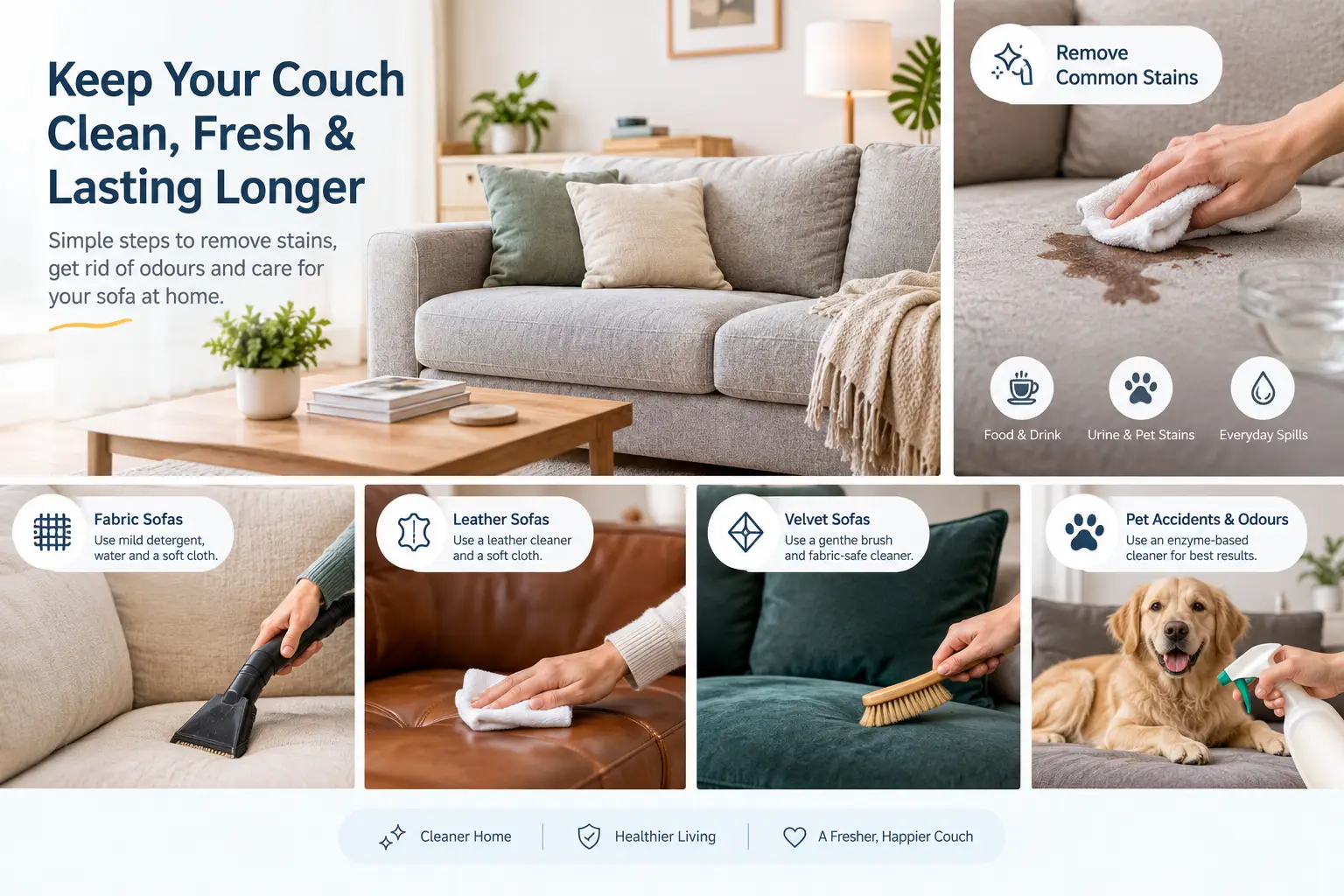
How to Clean a Fabric Couch at Home
Fabric couches can collect dust, body oils, food residue, and everyday stains. The safest cleaning method depends on the specific fabric and its care instructions.
Follow these steps:
- Vacuum the couch thoroughly, including the seams and areas beneath the cushions.
- If the care label permits water-based cleaning, mix a small amount of mild, upholstery-safe detergent with water according to the product instructions.
- Dampen a clean microfiber cloth with the solution. Avoid soaking the cloth or pouring water directly onto the couch.
- Gently blot or wipe the affected area, working from the outside of a stain towards its centre.
- Use a second cloth lightly dampened with clean water if the product instructions call for rinsing.
- Press a dry towel against the cleaned area to absorb excess moisture.
- Allow the couch to air-dry completely before replacing cushions or using it.
Avoid scrubbing vigorously, as this can push dirt deeper into the fabric, damage the fibres, or spread the stain.
Important: Some fabric couches are water-sensitive, even when they look durable. For upholstery marked S or X, do not use this water-based method unless the manufacturer specifically permits it.
How to Clean a Leather Couch
Leather sofas need a different approach from fabric couches. Excessive water, harsh detergents, and unsuitable household cleaners can damage the finish, cause discolouration, or dry out the leather.
Follow these steps:
- Remove loose dust and crumbs with a soft cloth or a vacuum attachment suitable for leather.
- Wipe the surface gently with a clean, dry microfiber cloth.
- If additional cleaning is necessary, use a leather cleaner approved for your specific leather finish.
- Apply the product as directed, using a soft cloth rather than spraying excessive liquid directly onto the couch.
- Wipe away residue according to the product instructions.
- Allow the leather to dry naturally, away from direct sunlight and heat.
- Apply a leather conditioner only if recommended for the leather type and manufacturer.
Avoid using vinegar, bleach, abrasive sponges, or general-purpose household cleaners on leather unless the manufacturer specifically approves them.
Aniline leather, suede, nubuck, and other delicate finishes may require specialist care. Do not assume that a product suitable for protected leather is safe for every leather couch.
How to Clean a Velvet Couch
Velvet upholstery looks luxurious but can be easily affected by moisture, pressure, and aggressive brushing. Some velvet couches are made from cotton or silk, while others use polyester or blended fibres, so the correct method depends on the material.
For routine cleaning:
- Check the manufacturer’s care instructions.
- Remove dust using a suitable upholstery attachment on a low-suction setting.
- Brush the velvet gently in the direction recommended by the manufacturer using a soft velvet brush.
- For a fresh spill, blot the area immediately with a clean, dry cloth.
- If the care label permits spot cleaning, use an approved product sparingly and test it in a hidden area first.
- Let the fabric dry naturally without applying direct heat.
Avoid rubbing the pile aggressively, soaking the velvet, or pressing hard against it. These actions can flatten the fibres and create visible marks.
For silk velvet, antique velvet, or upholstery marked S or X, professional cleaning is generally the safer option.
How to Clean a Microfiber Couch
Microfiber couches are often relatively easy to maintain, but their cleaning requirements vary by construction and care label.
- Vacuum the sofa to remove dust, crumbs, and pet hair.
- Check whether the manufacturer permits water-based or solvent-based cleaning.
- Apply the approved cleaner sparingly with a clean cloth.
- Blot stains gently instead of rubbing them.
- Allow the surface to dry completely.
- If recommended by the manufacturer, gently brush the dry fibres to restore their texture.
Do not automatically use water on every microfiber couch. Some materials may develop water rings or marks when cleaned with an unsuitable solution.
Step 4: How to Remove Common Couch Stains
The sooner you treat a spill, the easier it is to prevent it from becoming a permanent stain. Always remove excess material first and use a cleaning product that is safe for your upholstery.
How to Remove Food and Drink Stains
Food and drink spills can leave visible marks, sticky residue, and unpleasant smells.
- Remove solid food carefully with a spoon or blunt edge without scraping the upholstery.
- Blot liquid spills with a dry cloth to absorb as much moisture as possible.
- Apply an upholstery-safe stain remover according to its instructions.
- Blot gently, working from the outside of the stain inward.
- Remove any residue as directed by the product manufacturer.
- Allow the area to dry fully.
Coffee, tea, juice, and coloured sauces may require different treatments. Avoid applying several cleaners one after another without checking their compatibility.
How to Remove Grease and Oil Stains
Grease from food, hair products, or body oils can accumulate on armrests and headrests.
- Blot fresh grease with an absorbent cloth without rubbing it further into the fabric.
- Use a cleaner approved for the upholstery and suitable for oily stains.
- For S-coded upholstery, select an appropriate solvent-based product rather than a water-based solution.
- Follow the product’s application and residue-removal instructions.
Avoid using dishwashing liquid indiscriminately, as it can leave residue or affect delicate upholstery finishes.
How to Remove Ink Stains
Ink stains can be difficult to remove because different inks respond to different cleaning agents.
Blot fresh ink carefully without spreading it. Then use a stain remover specifically approved for the upholstery and ink type. If the manufacturer recommends a solvent-based cleaner, follow those instructions and ensure adequate ventilation.
Do not pour rubbing alcohol directly onto the couch. It may cause colour loss, dissolve the finish, or spread the ink. For expensive or delicate upholstery, seek professional help.
How to Remove Sweat and Body-Oil Stains
Headrests, armrests, and seat cushions often become discoloured through repeated contact with skin, hair, and clothing.
Vacuum the affected area and use an upholstery-safe cleaner suitable for the fabric. Avoid soaking the cushion, as body oils may have penetrated deeper than the visible surface.
For persistent yellowing, greasy marks, or widespread discolouration, professional upholstery cleaning may achieve a more even result than repeated spot treatments.
Step 5: How to Get Urine Smell Out of a Couch
Urine can leave both a visible stain and a persistent odour. If it penetrates the cushion foam, simply wiping the surface may not remove the source of the smell.
Whether the urine comes from a child, an adult, or a pet, prompt treatment is important.
For a fresh urine stain:
- Blot the area immediately with clean, absorbent towels.
- Press gently to draw out as much liquid as possible. Do not rub the stain.
- Check the couch’s cleaning instructions and choose a compatible urine or upholstery cleaner.
- Apply the product as directed, using only the amount needed to treat the affected area.
- If the product requires rinsing or residue removal, follow its instructions carefully.
- Absorb excess moisture with a dry towel.
- Allow the couch and cushion to dry thoroughly in a well-ventilated area.
For suitable water-cleanable upholstery, an enzyme-based urine cleaner may help break down the organic compounds responsible for lingering odours. Confirm that the product is compatible with the fabric and any cushion materials it may reach.
What if the urine has dried?
Dried urine can leave concentrated residues inside the upholstery. A surface wipe may remove the visible mark without addressing the underlying odour.
Use a compatible urine-specific cleaner according to its label. Avoid repeatedly saturating the cushion, as excessive moisture can cause prolonged drying, mildew, or damage to internal materials.
If the urine has soaked deeply into the foam or the smell returns after cleaning, professional treatment may be necessary.
Step 6: How to Get Cat Pee Smell Out of a Couch
Cat urine can be particularly challenging to remove because it may leave a strong, persistent odour even after the visible stain disappears.
The most effective approach is to remove as much urine as possible, use an appropriate enzyme-based product, and dry the affected area completely.
Step-by-Step Method for Cat Urine
- Blot the urine immediately. Use paper towels or a clean absorbent cloth to soak up fresh urine. Press gently and replace the towels as they become wet.
- Avoid ammonia-based cleaners. Ammonia-based products are not a good choice for treating cat urine. Their smell may resemble components of urine and can complicate odour management. Never mix cleaning products.
- Choose a pet-urine enzyme cleaner. Select an enzyme-based cleaner that specifically states it is suitable for cat urine and compatible with your sofa’s upholstery. Follow the label instructions regarding application, contact time, and removal.
- Treat the affected area thoroughly. Cat urine can travel through the fabric into the cushion underneath. The cleaner must reach the contaminated area to work effectively, but do not oversaturate the cushion or use a product that is unsuitable for the upholstery.
- Let the area dry completely. Provide good ventilation and keep pets and children away from the treated area as directed on the product label. Avoid heat sources and direct sunlight if they could damage the material.
- Check whether the smell remains. Once the couch has dried, check for lingering odours. If the smell persists, the urine may have reached the cushion foam or other internal components. A deeper treatment or professional upholstery cleaning may be needed.
Does Baking Soda Remove Cat Pee Smell?
Baking soda can help absorb some surface odours, but it does not reliably break down all the compounds responsible for cat urine smells.
If your upholstery manufacturer permits its use, a small amount may be applied to a dry, affected area and vacuumed thoroughly after the recommended period. Test first, as powders can be difficult to remove from certain fabrics and may affect delicate materials.
For persistent cat urine odour, a compatible enzyme-based cleaner is generally a more targeted option.
Safety tip: Never combine bleach, ammonia, vinegar, hydrogen peroxide, or other cleaning products. Mixing products can cause hazardous reactions or damage your couch. Use one compatible product at a time and follow its safety instructions.
Step 7: How to Remove Pet Hair and Pet Odours
Pet hair can become trapped in upholstery, especially on textured fabric and microfiber sofas.
To remove it effectively:
- Vacuum with a suitable upholstery attachment.
- Use a soft pet-hair brush or a fabric-safe hair-removal tool.
- Clean removable cushion covers only according to their care labels.
- Treat the source of any persistent odour rather than relying on air fresheners.
- Allow the couch to dry completely after any wet cleaning.
If your pet repeatedly urinates on the couch, consider using a washable protective cover while addressing the underlying cause of the accidents.
Step 8: Can You Use Baking Soda to Clean a Couch?
Baking soda is commonly used for odour management, but it is not a universal sofa-cleaning solution.
For upholstery that permits powder-based cleaning:
- Ensure the surface is dry.
- Test a small amount in a hidden area.
- Sprinkle a light, even layer over the affected area.
- Leave it for the period recommended by the upholstery manufacturer or product instructions.
- Vacuum thoroughly using an appropriate attachment.
Baking soda may help with mild surface odours, but it will not remove every stain, disinfect every surface, or reliably eliminate urine that has penetrated cushion foam.
Avoid using it on delicate upholstery unless the manufacturer confirms that it is safe. Prevent children and pets from inhaling or ingesting the powder.
Step 9: How to Dry a Couch After Cleaning
Proper drying is just as important as cleaning. Damp upholstery can develop musty smells, and moisture trapped inside cushions may encourage mould growth.
Follow these tips:
- Open windows where weather and outdoor air quality permit.
- Use a fan to improve air circulation.
- Keep removable cushions separated while they dry, if the manufacturer permits.
- Avoid direct heat from heaters or hair dryers.
- Do not replace cushion covers or use the couch until the cleaned areas are completely dry.
- Check thicker cushions for moisture inside, not just on the surface.
In humid conditions, drying can take longer. Air conditioning or a dehumidifier may help reduce indoor humidity and speed up drying when used appropriately.
If a cushion remains damp or develops a musty smell, avoid covering it or continuing to use it until the moisture problem has been addressed.
Common Couch-Cleaning Mistakes to Avoid
Even well-intentioned cleaning can damage upholstery when the wrong products or techniques are used.
- Using too much water: Excess moisture may penetrate the cushion foam, damage adhesives, or leave water marks.
- Scrubbing stains aggressively: Rubbing can spread stains, distort fabric fibres, and damage delicate velvet or woven upholstery.
- Ignoring the cleaning label: A method that works on one fabric may ruin another.
- Using harsh household chemicals: Bleach, strong detergents, and incompatible solvents can cause fading, discolouration, or material damage.
- Mixing cleaning products: Combining chemicals can create dangerous fumes or reactions.
- Using steam without checking compatibility: Heat and moisture can damage leather, delicate fabrics, adhesives, and certain cushion materials.
- Masking odours with air fresheners: Fragrance may temporarily cover a smell without removing the source.
- Leaving the couch damp: Incomplete drying can lead to persistent odours and potential mould problems.
How Often Should You Clean Your Couch?
The ideal cleaning frequency depends on how often you use the sofa, the upholstery material, and whether you have children or pets.
Here is a practical maintenance schedule:
| Cleaning task | Suggested frequency |
|---|---|
| Remove crumbs and visible debris | As needed |
| Vacuum the couch | Weekly |
| Spot-clean fresh spills | Immediately |
| Check and clean high-contact areas | Every few weeks, as needed |
| Wash removable covers | According to the care label |
| Arrange deeper upholstery cleaning | Periodically, based on use and manufacturer guidance |
Households with pets, young children, allergies, or frequent visitors may need more frequent maintenance. Always follow the manufacturer’s care instructions.
DIY Couch Cleaning vs Professional Sofa Cleaning
Cleaning your couch at home is useful for routine maintenance and small, fresh stains. However, some problems require more than a cloth and a household cleaner.
| DIY couch cleaning | Professional sofa cleaning |
|---|---|
| Suitable for routine dust removal and minor spills | Useful for more extensive upholstery cleaning |
| Relies on household tools and compatible cleaning products | Uses methods and equipment selected for the upholstery |
| May not reach deeply embedded dirt or urine | May help address deeper contamination when the material and cushion construction permit |
| Requires careful drying and stain treatment | Can offer more targeted treatment for persistent stains and odours |
Professional cleaning does not guarantee that every stain or smell will disappear. Results depend on the upholstery, age of the stain, previous cleaning attempts, and depth of contamination.
If your sofa has persistent odours, widespread stains, delicate upholstery, or urine that has soaked into the cushion foam, professional assessment can help you choose a safer and more effective treatment.
For households in Dubai and other UAE locations, Care N Clean’s sofa cleaning service is an option to consider when your couch needs more thorough attention than routine home cleaning can provide. Explore the service page to learn more about the available sofa-cleaning options.
How to Keep Your Couch Clean for Longer
A few simple habits can reduce dirt buildup and help maintain your sofa’s appearance between deeper cleans.
- Vacuum regularly, particularly around seams and beneath cushions.
- Blot spills as soon as they happen.
- Use washable throws or protective covers in high-use areas.
- Avoid eating or drinking on the couch when practical.
- Keep pets’ paws clean after outdoor activities.
- Rotate and reposition removable cushions according to the manufacturer’s guidance.
- Keep the couch away from excessive sunlight and heat.
- Address urine and other odour-causing accidents immediately.
- Avoid applying untested cleaning products or fabric protectors.
Prevention is easier than removing an old stain, especially when liquid has penetrated the inner cushion.
Frequently Asked Questions
What is the best way to clean a couch at home?
The best method is to vacuum the couch thoroughly, identify the upholstery material, and use a compatible cleaning product. Blot stains rather than scrubbing, avoid excessive moisture, and allow the sofa to dry completely.
Can I clean my couch with dish soap and water?
Only if the upholstery manufacturer permits water-based cleaning and the detergent is suitable for the material. Use a small amount of an appropriate cleaner, avoid soaking the fabric, and remove residue according to the product instructions.
How do I clean a couch without a vacuum cleaner?
Remove loose crumbs by hand and use a soft upholstery brush to lift surface dust and hair. Blot fresh spills with a clean cloth. However, a vacuum cleaner is more effective for removing fine dust and debris from seams and beneath cushions.
How do I get a bad smell out of a couch?
First identify the source of the smell. Vacuum away loose dirt, then use a compatible cleaner designed for the specific problem. An enzyme-based product may help with urine odours on suitable upholstery. Dry the couch thoroughly and seek professional help if the smell persists.
How do I get old urine smell out of couch cushions?
Old urine may have penetrated the cushion foam. Use a compatible urine-specific cleaner according to its instructions without oversaturating the cushion. If the smell returns after drying, the inner foam may need deeper treatment or professional attention.
Does vinegar remove urine smell from a couch?
Vinegar may help with some odours on certain water-safe materials, but it is not a reliable solution for every urine stain and can damage some upholstery finishes. Never mix vinegar with bleach or other cleaners. A compatible enzyme-based urine cleaner is often a more targeted choice.
Can I use a steam cleaner on my couch?
Only when the upholstery manufacturer explicitly permits steam cleaning. Heat and moisture can damage certain fabrics, leather, adhesives, and cushion materials. Check the care label and equipment instructions before proceeding.
How do I clean a white fabric couch?
Vacuum the couch first and use a fabric-safe cleaner approved for the upholstery. Treat stains individually, test products in hidden areas, and avoid bleach unless the manufacturer explicitly permits it. Clean the affected areas evenly to minimise water marks or colour differences.
How long does a couch take to dry after cleaning?
Drying time depends on the fabric, amount of moisture, cushion thickness, room temperature, and humidity. Lightly dampened upholstery may dry within a few hours, while thicker cushions can take considerably longer. Do not use the couch until it is completely dry.
When should I hire a professional sofa cleaning service?
Consider professional cleaning when stains persist, urine has penetrated the cushion foam, odours return after home treatment, or the couch has delicate upholstery that is difficult to clean safely. A professional can assess the material and recommend a suitable cleaning method.
Final Thoughts
Knowing how to clean a couch at home can help you remove everyday dirt, manage fresh stains, and keep your living room looking tidy. The most important steps are to identify the upholstery material, choose the right cleaning product, treat spills promptly, and avoid excessive moisture.
Fabric, leather, velvet, and microfiber sofas all have different cleaning requirements. Pet urine and other persistent odours may also require specialised treatment, particularly when contamination reaches the inner cushions.
For routine maintenance, careful home cleaning is often sufficient. When your couch needs a more thorough clean or has stubborn stains and lingering smells, consider Care N Clean’s sofa cleaning service for professional assistance.